Cast-Iron Skillet No-Nos: Avoid These Common Mistakes

Do you own a cast-iron skillet and want to make the most of it? These pans can transform your cooking, but if you don’t take care of them the right way, they won’t last. Here’s what to avoid so your skillet stays in great shape for years.
This post may contains affiliate links. If you click and make a purchase, I may earn a small commission at no extra cost to you. I only recommend products I personally use or genuinely believe in. Thank you for supporting 100 Perfect Gifts.
New to cast iron? Start with “Mastering Cast Iron” for the full overview, then come back here for the mistakes to dodge.
Importance of Proper Cast-Iron Skillet Care
A good cast-iron skillet is worth protecting. Care it right, and it’ll cook better, last longer, and stay safer to use. Get it wrong, and you’ll be fighting rust and a sticky surface instead of enjoying the pan.
Longevity and Performance Benefits
A well-cared-for skillet can last for decades, sometimes generations. The right care builds a strong, natural non-stick layer that only gets better with time.
Avoiding Potential Health Risks
This isn’t just about keeping the pan looking nice. Neglect it, and buildup can work its way into your food. Clean and store it properly, and you don’t have to think twice about what’s cooking in it.
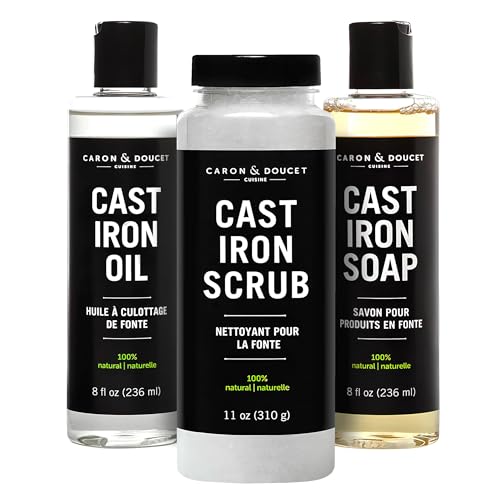
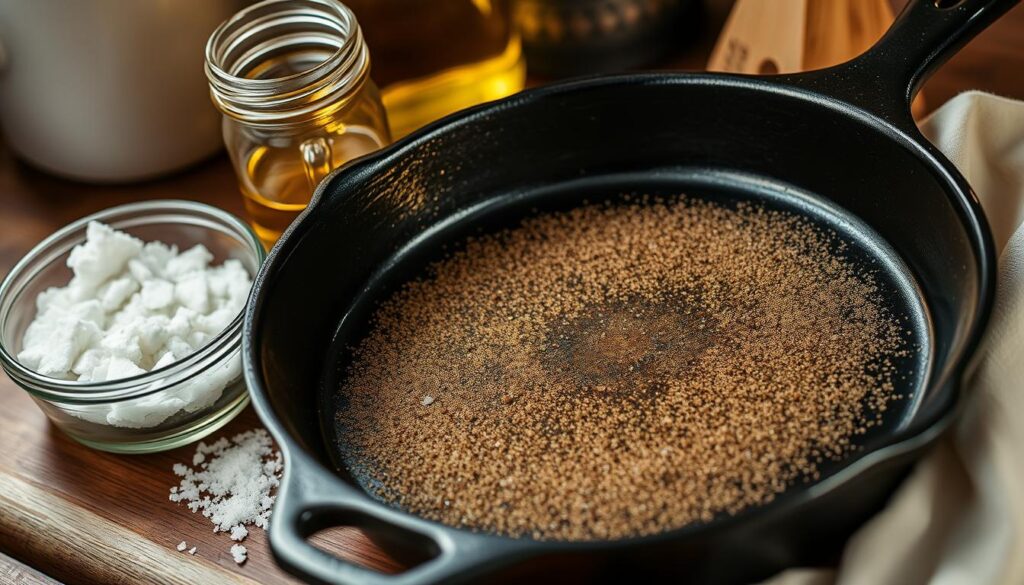
I personally don’t scrub unless I see a bit of rust, or I’ve picked up a rusty pan secondhand. This is what I reach for when I do:
Mistake to Avoid: Using Soap and Harsh Cleaners
Soap and harsh cleaners strip away the seasoning that makes your skillet worth having. Skip them. Wipe your pan with a damp cloth, or use a stiff-bristled brush and hot water. Don’t let it soak, soaking is where the real damage happens.
“The seasoning on a cast-iron pan is delicate and can be easily stripped away by detergents. Opt for a gentle cleaning method instead.”
Cast-Iron Skillet No-Nos: Avoid Abrasive Scrubbing
Scouring pads and abrasive scrubbers will scratch and wear down your seasoning, the same layer that keeps food from sticking and keeps rust away.
Protecting the Seasoned Surface
Seasoning builds up over time from heating oil until it hardens. It’s what makes the pan non-stick and rust-resistant, and it’s easier to wear down than you’d think.
For cleanup, reach for a soft-bristled brush, a sponge, or a bit of coarse salt worked in by hand. All of these clear stuck-on food without touching the seasoning underneath.
The Perils of Soaking a Cast-Iron Skillet
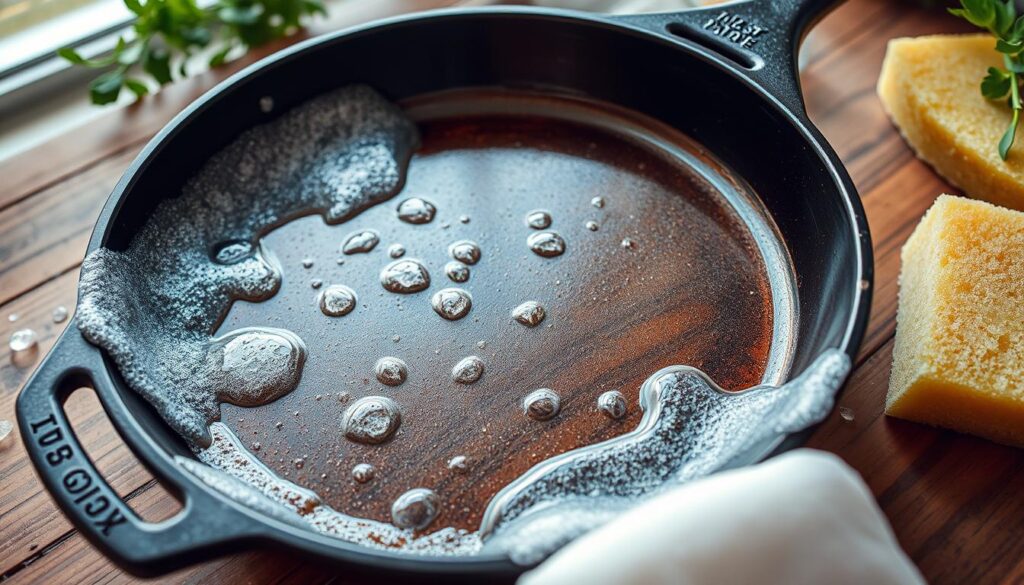
Letting your skillet sit in water, even overnight in the sink, is one of the fastest ways to undo good seasoning. Water strips it away and invites rust, and rust means it’s contaminating whatever you cook next.
If food’s stuck on, a stiff brush and hot water will get it loose without the soak.
“Soaking a cast-iron skillet in water for too long can strip away the pan’s seasoning and lead to rust, compromising its performance and lifespan.”
Mistake to Avoid: Cooking Acidic Foods
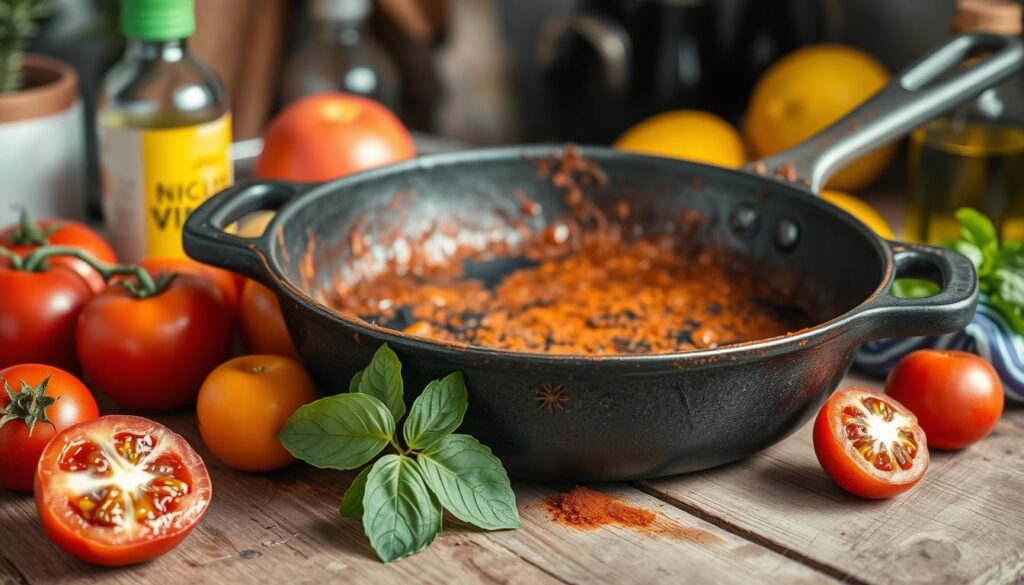
Tomatoes, vinegar-based sauces, and citrus can wear down your seasoning fast, especially the longer they simmer. Past a certain point, you’ll notice it in the taste too, a faint metallic edge that has no business being in your dinner.
For the full breakdown of exactly which foods to watch for and how long is too long, see “What Not to Cook in a Cast Iron Skillet”.
Understanding the Impact on Flavor and Seasoning
Acid and cast iron don’t mix well over time. It breaks down the seasoning that gives you a good sear, and it can leave a metallic taste behind that nobody’s asking for.
| Acidic Food | Impact on Cast-Iron Skillet |
|---|---|
| Tomatoes | Strips away seasoning, can leave a metallic taste |
| Vinegar-based sauces | Weakens the protective layer, changes the flavor |
| Citrus | Degrades seasoning, can leave the pan discolored |
If you’re cooking something acidic, keep it brief and clean the pan well after. For anything long-simmered, reach for stainless steel or enameled cast iron instead.
Mistakes in Seasoning and Re-Seasoning
Keeping your skillet seasoned well is what keeps it non-stick and rust-free, but it’s easy to get wrong. Lodge’s own guide covers their take on seasoning too, worth a look alongside this.
The most common mistakes:
- Not cleaning the pan thoroughly before seasoning, leftover food or debris ruins the process
- Using the wrong oil. Stick to high smoke point oils like vegetable, canola, or grapeseed
- Not heating the skillet until it just starts to smoke before adding oil
- Skipping re-seasoning after heavy use or a deep clean
Cast-Iron Skillet No-Nos: Improper Storage
Moisture is the enemy here. Rust is the most common way a good skillet gets ruined, and it almost always comes down to how it was stored.
The Best Way to Store Cast-Iron Skillets
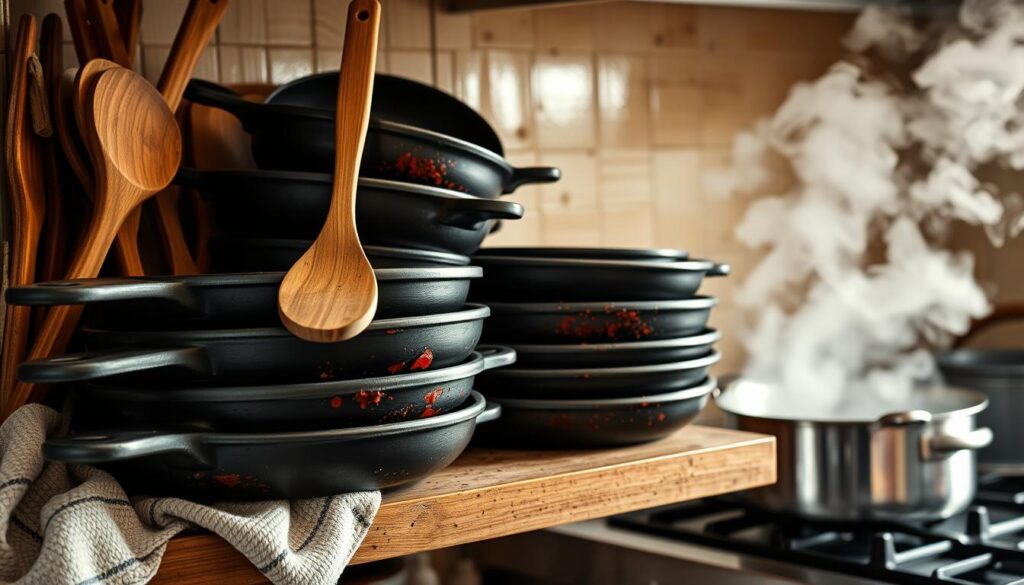
Once it’s clean and completely dry, store it somewhere dry: a towel-lined drawer, a hanging rack, or even a clean oven. Skip stacking heavy cookware on top, it can bend the pan or scrape the seasoning.
How to Prevent Rust on Cast-Iron Cookware
- Make sure it’s fully dry before you put it away
- Skip the damp cabinet or cluttered counter
- A thin layer of oil or beeswax adds a little extra protection
- Storing it in the oven works well since it stays dry and enclosed
| Do | Don’t |
|---|---|
| Store in a dry, well-ventilated place | Leave it in a damp cabinet or on a cluttered counter |
| Apply a thin layer of oil or beeswax | Stack heavy cookware on top |
| Hang it on a sturdy rack | Store it before it’s fully dry |
| Keep it in a towel-lined drawer |
Common Mistakes in Heating and Cooking
Cast iron rewards patience. Heat it too fast or unevenly, and you’ll fight both your food and your seasoning.
Achieving Perfect Searing and Browning
Let the pan fully preheat before food goes in, that’s what gets you an even sear instead of a soggy start. And don’t crowd the pan. Cooking in batches lets the heat do its job and gives you that deep, caramelized flavor.
| Do This | Not This |
|---|---|
| Fully preheat the skillet | Heat it too quickly or unevenly |
| Keep heat even throughout | Add food before it’s hot enough |
| Cook in batches | Crowd the pan |
“The key to great searing is getting the pan hot enough before adding the food. With cast-iron, that means letting it preheat for at least 5 minutes.”
Conclusion
Keep your skillet in top shape by skipping harsh cleaners, rough scrubbing, and the wrong kind of storage. Season it right, watch what you cook and for how long, and give it the patience it asks for at the stove. Do that, and it’ll outlast most everything else in your kitchen.
FAQ
Can I use soap and harsh cleaners on my cast-iron skillet?
No. Soap and harsh cleaners strip the seasoning that protects your pan. Wipe it with a damp cloth or use a stiff-bristled brush and hot water instead. Don’t let it soak.
Is it okay to use abrasive scrubbing pads on my cast-iron skillet?
No. They’ll scratch and wear down the seasoned surface. A soft-bristled brush, a sponge, or a bit of coarse salt will clear stuck-on food without the damage.
Can I soak my cast-iron skillet in water?
No. Soaking strips the seasoning and invites rust. If food’s stuck on, a stiff brush and hot water will do the job.
Are there any foods I should avoid cooking in my cast-iron skillet?
Highly acidic foods like tomatoes, vinegar-based sauces, and citrus can strip the seasoning and leave a metallic taste, especially the longer they cook. See “What Not to Cook in a Cast Iron Skillet” for the full breakdown by food.
How do I properly season and re-season my cast-iron skillet?
Clean it thoroughly first, use a high smoke point oil like vegetable, canola, or grapeseed, and heat the pan until it just starts to smoke before adding the oil. Re-season after heavy use or a deep clean.
How should I store my cast-iron skillet?
Dry it completely, then store it somewhere dry, a towel-lined drawer, a hanging rack, or a clean oven. Don’t stack heavy cookware on top of it.
What are some common mistakes to avoid when heating and cooking with my cast-iron skillet?
Heating it too fast or unevenly, adding food before it’s fully preheated, and crowding the pan. Let it preheat fully and cook in batches for the best sear.
Popular Recipes Made in My Cast Iron Pots
Dutch Oven Beef Stew, you have to try in cast iron