The Ultimate Guide to Choosing and Using an Oven Thermometer

Most of my followers know I write alot about what happens in my life, what I am experiencing, what I am making, gardening, etc.
This post may contains affiliate links. If you click and make a purchase, I may earn a small commission at no extra cost to you. I only recommend products I personally use or genuinely believe in. Thank you for supporting 100 Perfect Gifts.
Today, it is about oven thermometers because my oven kept ruining my bread! I even cooked one loaf 3 hours. Ok, that was enough and I started digging into what the problem was. I ordered another thermometer too! Here are my findings!!
There’s nothing more frustrating than pulling a dish out of the oven only to find it undercooked or burnt to a crisp. You followed the recipe exactly, but somehow, your food still didn’t turn out right. The culprit? An inaccurate oven temperature. Ovens can be off by 25 degrees or more, and that slight difference can ruin your results. That’s where an oven thermometer comes in.
This small but mighty tool ensures you’re baking, roasting, and broiling at the right temperature every time. In this guide, we’ll cover why you need an oven thermometer, how to use one, what to look for when buying, and how incorrect oven temperatures affect baking—especially bread.
1. Why You Need an Oven Thermometer
Your oven’s built-in display might not be telling the whole truth. Many ovens have temperature fluctuations, meaning the number on the screen doesn’t always match the actual heat inside.
Here’s why using an oven thermometer is a game-changer:
- Accuracy – Your oven could be hotter or colder than it claims. A thermometer gives you the real temperature.
- Better Baking & Roasting – Breads, cakes, and meats cook evenly when the temperature is right.
- Prevents Wasted Food – Overcooked or undercooked meals are frustrating and costly.
- Essential for Recipes – Some dishes require precise temperatures, especially baked goods.
🔎 ThermoWorks explains why oven accuracy matters, showing how even a small temperature difference can affect baking and cooking results.
Picture This: You preheat the oven, pop in a tray of cookies, and set the timer. Halfway through, you check, and some are browning too fast while others look raw. If you had an oven thermometer, you’d know whether to adjust the temperature and save your batch from disaster.
2. How to Use an Oven Thermometer Correctly
Using an oven thermometer is simple, but placement is key. Follow these steps for accurate readings:
Step 1: Position It Right
- Place the thermometer in the center of the middle rack—this is where most foods cook best.
- Avoid putting it near the oven walls or on a baking sheet, as these areas get extra heat.
Step 2: Preheat and Observe
- Turn on your oven and let it preheat completely before checking the thermometer.
- Some ovens beep before they’re truly at temperature—wait an extra 10-15 minutes for accuracy.
Step 3: Adjust If Needed
- If your thermometer shows a different temperature than what you set, adjust your oven setting accordingly.
- For example, if you set it to 350°F but the thermometer reads 325°F, increase the oven setting to about 375°F to compensate.
Picture This: You’re preparing a Thanksgiving turkey, and the recipe calls for 325°F. You pop it in, but an hour later, it’s not browning. Your oven thermometer reveals the real temperature is only 300°F—a small tweak saves your holiday meal.
3. Choosing the Best Oven Thermometer
Not all oven thermometers are created equal. Here’s what to look for when buying one:
1. High Heat Resistance
Some thermometers can handle up to 600°F, while cheaper ones might stop working at 400°F. Choose one rated for high heat to last longer.
2. Easy-to-Read Display
A large dial or a digital readout makes checking the temperature effortless.
3. Durable Construction
Stainless steel models last longer than plastic or flimsy alternatives.
4. Fast Response Time
Some thermometers take longer to show temperature changes. Look for ones that react quickly.
Picture This: You’re browsing for a new oven thermometer and spot a cheap one with a tiny dial. You buy it, but when it arrives, the numbers are hard to read, and it struggles above 400°F. A better choice would have made cooking easier and more precise.
-
 $26.99Easy to see
Winco TMT-OV2 3-Inch Dial Oven Thermometer. Product specifications: 2.75"L x 1.75"W x 3.75"H. Oven thermometer. Temperature range 50 to 500 degrees F. Pack of 2.
This post May contain affiliate links. When you purchase through links on our site, we may earn an affiliate commission from Amazon or other companies at no additional cost to you
09/23/2026 05:44 pm GMT -
$17.95Amazon
- For best results, place the thermometer in your oven near where your food will cook since temperatures could be slightly different throughout the inside of your oven
- Two-point hook holds thermometer securely in place on thin or Thick wires
- Wide, angled base keeps thermometer stable while standing
- Large numbers for quick temperature readings ( DegreeF and DegreeC)
This post May contain affiliate links. When you purchase through links on our site, we may earn an affiliate commission from Amazon or other companies at no additional cost to you
09/23/2026 01:21 pm GMT -
$32.99My Choice
- Dual Laser: ThermoPro infared temp thermometer has dual laser pointers with a 0.5-second response time, making it better than a single laser since it’s faster to target and easier to scan surface temperatures for reliable results every time
- Safer Distance & Better Accuracy: With the latest thermopile technology and a distance-to-spot ratio of 16:1, this ir thermometer gun allows you to read temps at longer, safer distance than ever before; Adjustable emissivity from 0.1 to 1.0 provides measurement accuracy across different surface types highly up to ±1.5%
This post May contain affiliate links. When you purchase through links on our site, we may earn an affiliate commission from Amazon or other companies at no additional cost to you
09/23/2026 08:14 am GMT -
$12.99Seen on Amazon
- EASY READING: you can see the actual temperature that your oven is registering with the digital LCD display, then make adjustments to ensure that you cook or roast at the proper temperature.
- HIGH ACCURACY: temperature ranges from 32~572ºF(0~300ºC), accurate to ±1.8ºF(±1ºC) which ensures you can grill meat to your perfect doneness knowing it won't be under cooked or burnt.
This post May contain affiliate links. When you purchase through links on our site, we may earn an affiliate commission from Amazon or other companies at no additional cost to you
09/23/2026 04:19 pm GMT -
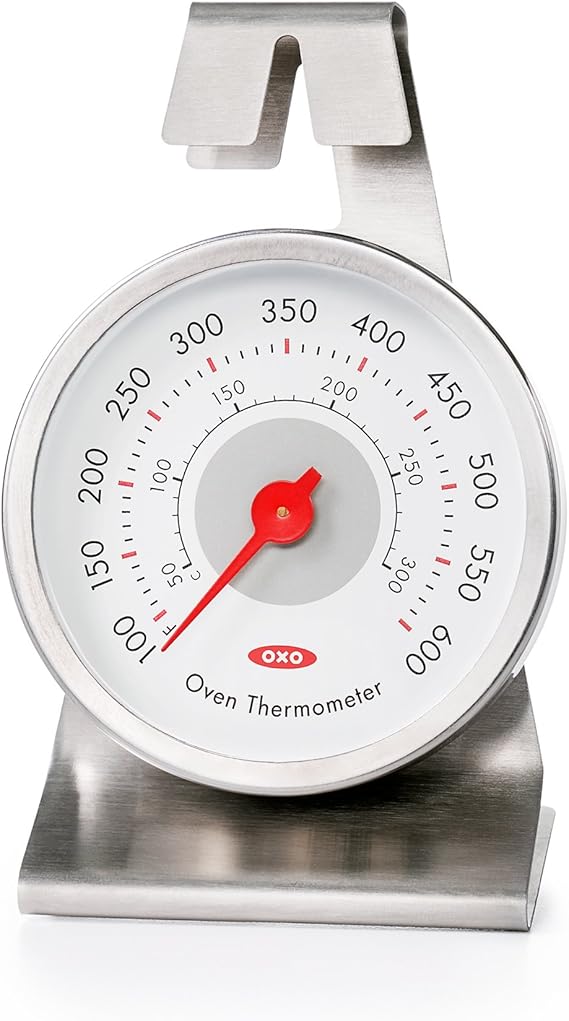
$8.55Found on Amazon
- Keep ovens baking and roasting with precision using this durable and accurate thermometer.
- Hang the thermometer in the oven or stand it up to read while the oven is on.
- Measuring 100 to 600 degrees Fahrenheit, this thermometer features a large face with easy-to-read zone guide references.
This post May contain affiliate links. When you purchase through links on our site, we may earn an affiliate commission from Amazon or other companies at no additional cost to you
09/24/2026 03:56 am GMT -
$19.97Found on Amazon
Taylor Oven
This post May contain affiliate links. When you purchase through links on our site, we may earn an affiliate commission from Amazon or other companies at no additional cost to you
09/24/2026 04:21 pm GMT



4. How Incorrect Oven Temperatures Affect Bread Baking
Bread baking is all about precision, and oven temperature plays a huge role in how your loaf turns out. Even small temperature differences can cause major changes in texture, crust formation, and rise.
Too Hot: Burnt Outside, Doughy Inside
When an oven runs hotter than expected, bread browns too quickly on the outside while staying raw in the center. This often leads to:
- A thick, tough crust that makes slicing difficult.
- A dense interior because the dough didn’t get enough time to rise before hardening.
Too Cool: Dense, Underbaked Loaves
When an oven runs too cool, bread takes longer to bake and doesn’t develop the right structure. This can result in:
- A flat loaf with little oven spring (rise during baking).
- A gummy or doughy texture inside, even if it looks done on the outside.
Fluctuating Temperatures: Inconsistent Results
If an oven has major fluctuations, bread may:
- Rise unevenly, creating lopsided loaves.
- Have an irregular crumb (interior texture), with some parts too airy and others too dense.
✅ Tip: Using an oven thermometer ensures you’re baking at the right temperature so your bread turns out with a perfect crust and fluffy interior every time!
🔎 Would you like me to add an external link explaining the science behind bread baking and temperature?
Picture This: You follow a beloved bread recipe, but every time, your loaves turn out differently. One day they’re golden brown, another day they’re pale and undercooked. Your oven thermometer finally reveals the truth—your oven fluctuates between 25-50 degrees off. Now, with small adjustments, every loaf comes out just right.
5. Keeping Your Oven Thermometer Accurate
Like any kitchen tool, an oven thermometer needs occasional maintenance. Here’s how to keep it reliable:
Calibration Checks
- Boil water and place the thermometer inside—it should read 212°F (100°C) at sea level.
- If it doesn’t, your thermometer may need replacing.
Cleaning
- Over time, grease and grime can build up. Wipe it down regularly to keep the display clear.
Storage
- Don’t leave it inside the oven when broiling at extreme temperatures—this can wear it out faster.
Picture This: You rely on your oven thermometer for perfect roasts, but one day, your cookies still burn. Checking in boiling water, you realize it’s off by 15 degrees—a quick test saves you from more baking fails.
Final Thoughts
A good oven thermometer is one of the best investments for better cooking. Whether you’re baking pastries, roasting chicken, or making delicate soufflés, knowing your true oven temperature makes all the difference.
So what did I do? I have a GE Oven and we called GE to see if we could figure out what it might be. Since both ovens were not cooking right, I felt like it would not be the thermometer the oven uses and I did not think it was the board since they have different wires. We found out it was a calibration. Who knew that? We could actually change it inside the oven settings. Sure enough, my calibration was off 30 degrees!
🔎 Check out ThermoWorks’ article on why oven accuracy matters.
Meta Descriptions:
- “Discover how an oven thermometer can transform your cooking by ensuring accurate temperatures every time.”
- “Learn why an oven thermometer is essential for perfect baking and roasting in your kitchen.”
- “Unlock the secret to consistent cooking results with our guide on choosing and using an oven thermometer.”