6 Best Ways to Plant Potatoes for a Bountiful Harvest

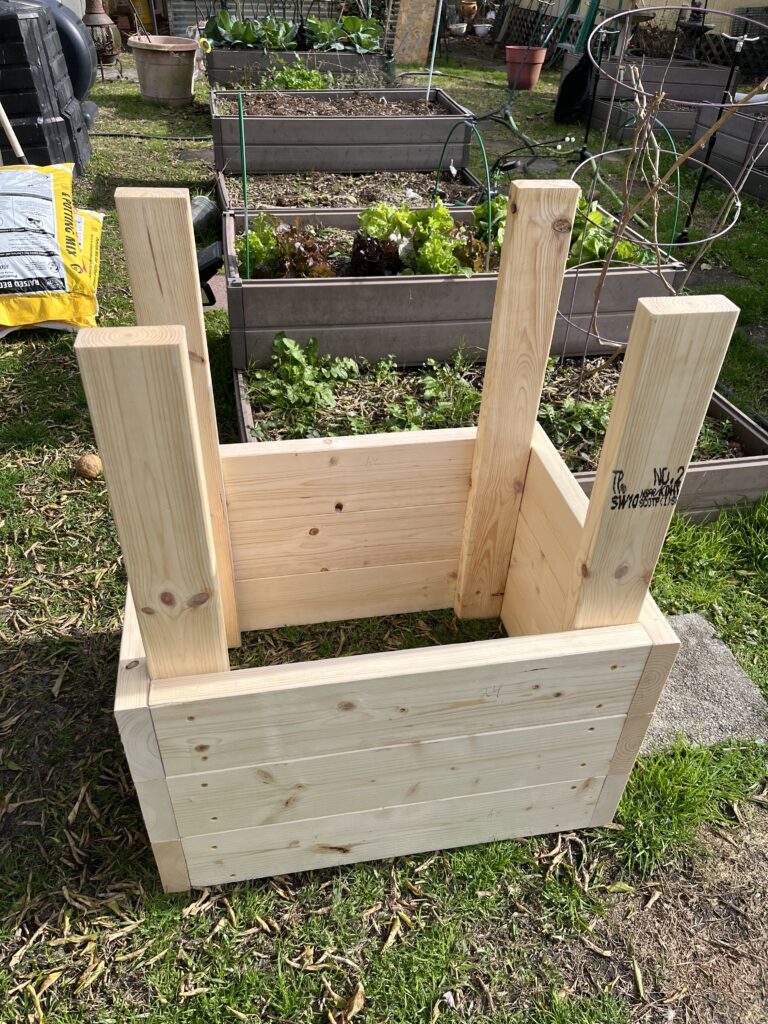
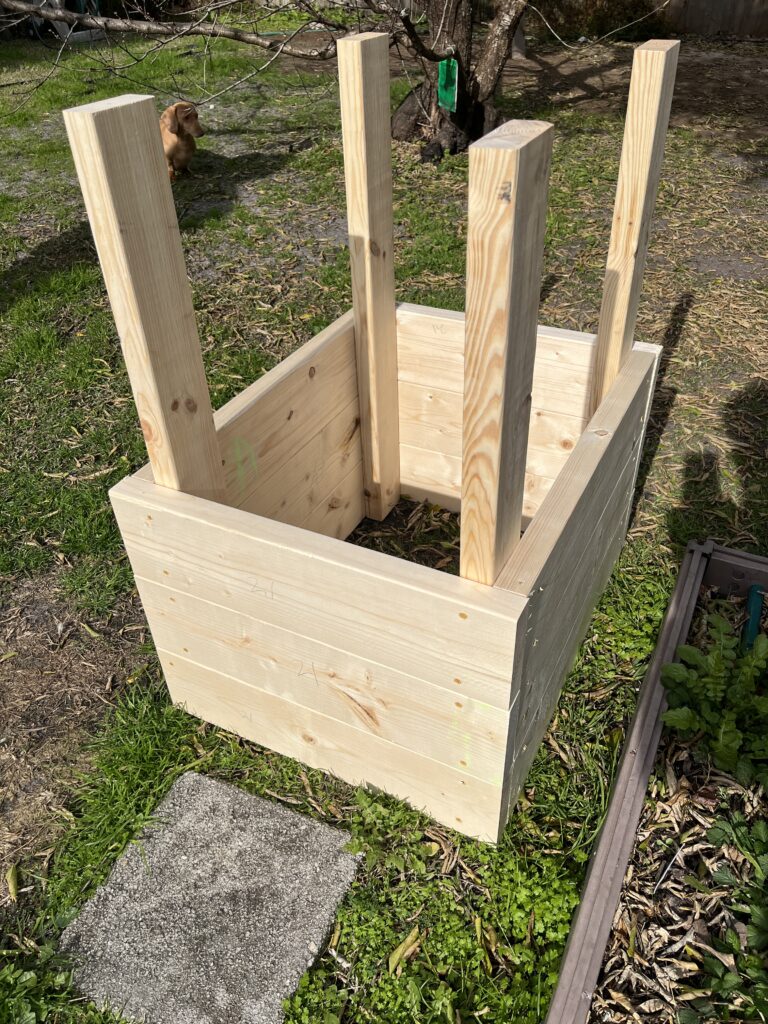
It is February in Zone 8A and that makes it Potato Time! My husband built a potato box we are trying this year! I usually just plant in my raised beds. Over the years, I just realized, this is not sustainable. The yields were not what I thought they should be and I felt I had a whole bed with nothing but potatoes that take so long to grow. This year, it’s a new box. I can see many uses with this box, we may have to make more. The only thing we are trying next is 1″ slats instead of 2″. We will put the other boards on as potatoes grow. Will keep you posted on how this works out.
This post may contains affiliate links. If you click and make a purchase, I may earn a small commission at no extra cost to you. I only recommend products I personally use or genuinely believe in. Thank you for supporting 100 Perfect Gifts.
Planting potatoes can be a rewarding home gardening experience, and there are plenty of ways to ensure they thrive. From choosing the right seed potatoes to finding the perfect spot to plant them, getting your hands dirty has never been more fun. Let’s jump right into the best methods and tips to help you grow a bountiful potato crop!
Preparing the Soil for Planting
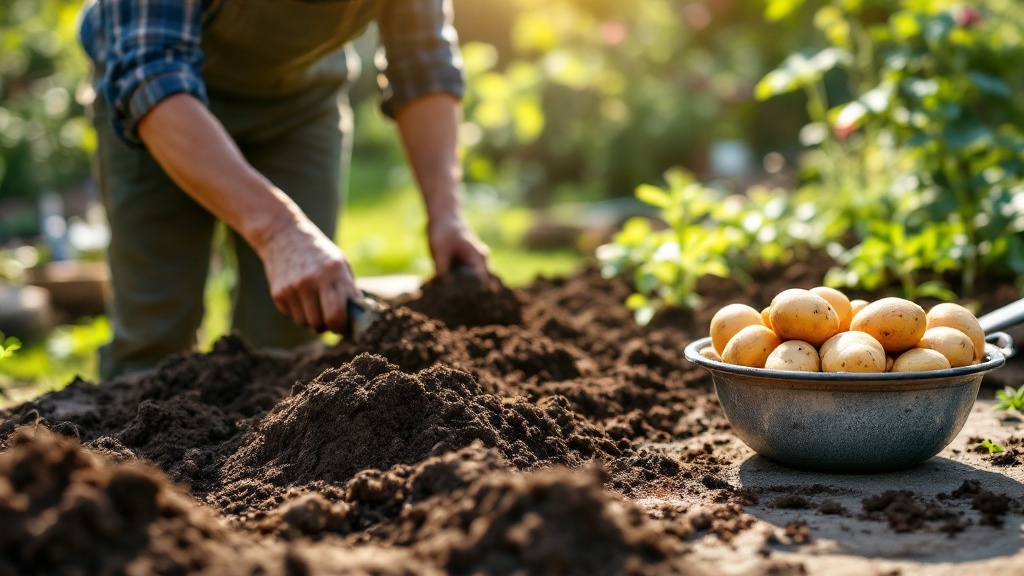
Getting ready to plant potatoes starts with the right soil preparation. In the image, you can see someone working hard to get the soil just right. The freshly tilled earth is a good sign that it’s ready for the next step. Potatoes thrive in loose soil, so breaking it up helps them grow big and healthy. I grow in boxes, but I am putting in some coconut this year to loosen the soil in my boxes better.
Notice the bowl of potatoes nearby? This shows that you’re not just preparing the soil; you’re also getting your seed potatoes ready. Choosing healthy seed potatoes is key for a successful crop. Make sure they are firm and free from blemishes.
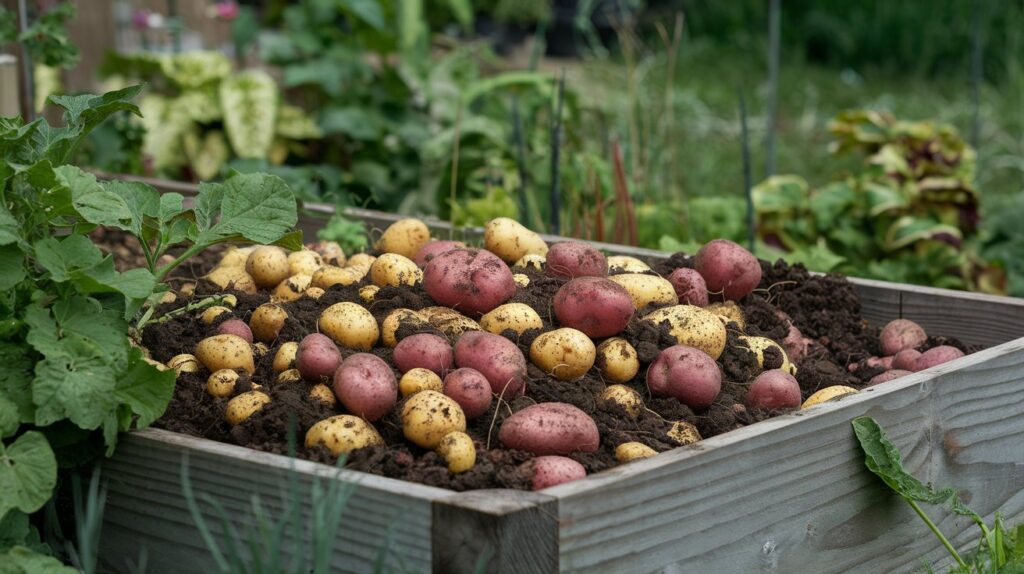
As you dig into the soil, look for rocks or debris. Removing these will give your potatoes room to grow. Mixing in some compost can also boost soil fertility, making it richer and more inviting for your crops.
Finally, don’t forget about drainage! Potatoes prefer well-drained soil to prevent rot. If your area tends to hold water, consider planting on a raised bed. With good preparation, you’ll be on your way to a fruitful potato harvest.
This is something I tried last year with amazing results Just click the title
Watering Requirements for Potatoes
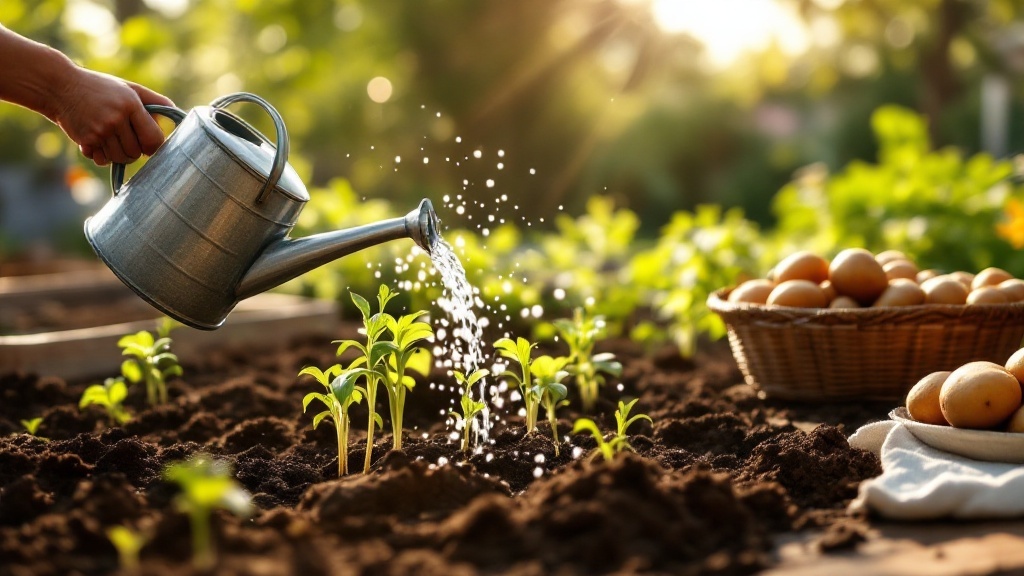
When it comes to growing potatoes, understanding their watering needs is key. The image shows a gardener gently watering young potato plants, which highlights the importance of hydration in the early stages of growth.
Potatoes thrive in moist soil but don’t like to sit in water. It’s best to water them deeply about once a week. This encourages roots to grow deeper, helping plants absorb nutrients effectively.
In the image, you can see a watering can, which is perfect for delivering water directly to the base of the plants. This method minimizes water loss through evaporation and ensures that the soil is evenly moist.
During hot weather, check the soil more frequently. If the top inch feels dry, it’s time to water. Remember, consistent moisture is vital for producing healthy tubers.
Lastly, as the plants mature, reduce watering slightly to prevent over-saturation. This balance will help you enjoy a bountiful harvest!
Managing Pests and Diseases
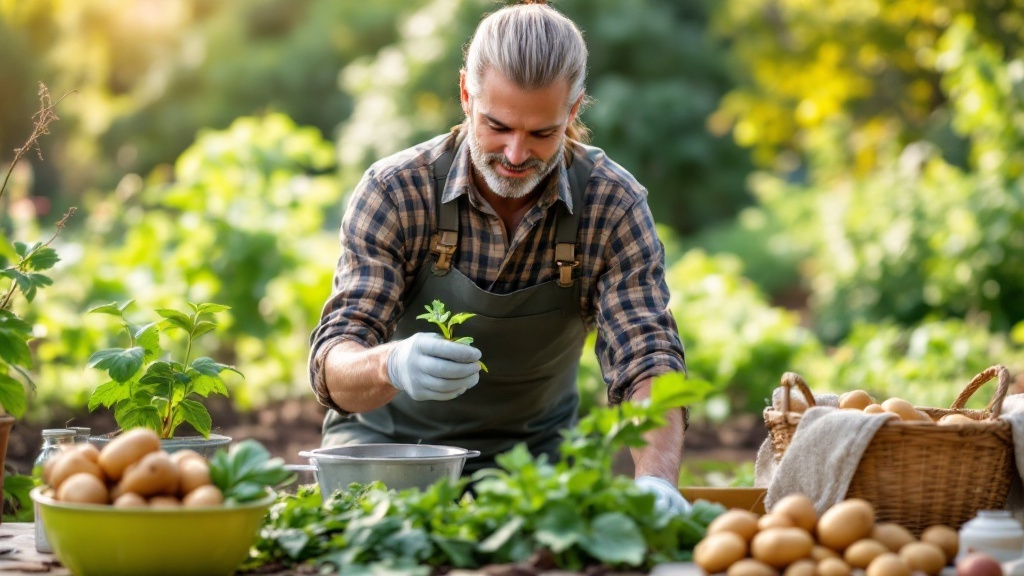
Growing potatoes can be rewarding, but pests and diseases can be a real challenge. The image captures a gardener focused on maintaining healthy plants. He’s surrounded by fresh greens and a basket of potatoes, showing the hands-on work involved in gardening.
One of the first steps in pest management is to regularly inspect your plants. Look for signs of trouble like yellowing leaves or holes. Early detection can save your crop from serious damage.
Using companion planting is another smart move. Certain plants can repel pests naturally. For example, planting marigolds or basil near your potatoes can help keep harmful insects at bay. We plant marigolds every year. Butterflies love them and bugs do not seem to come near, plus the colors are beautiful!
Don’t forget about the importance of crop rotation. Changing where you plant your potatoes each year can minimize the risk of disease buildup in the soil. This simple practice can keep your plants healthier over time.
Finally, consider organic pest control methods. Insecticidal soaps or neem oil can be effective against soft-bodied insects. Always apply them in the evening to avoid harming beneficial insects.
Read more about Potato Pests Here
Choosing the Right Seed Potatoes
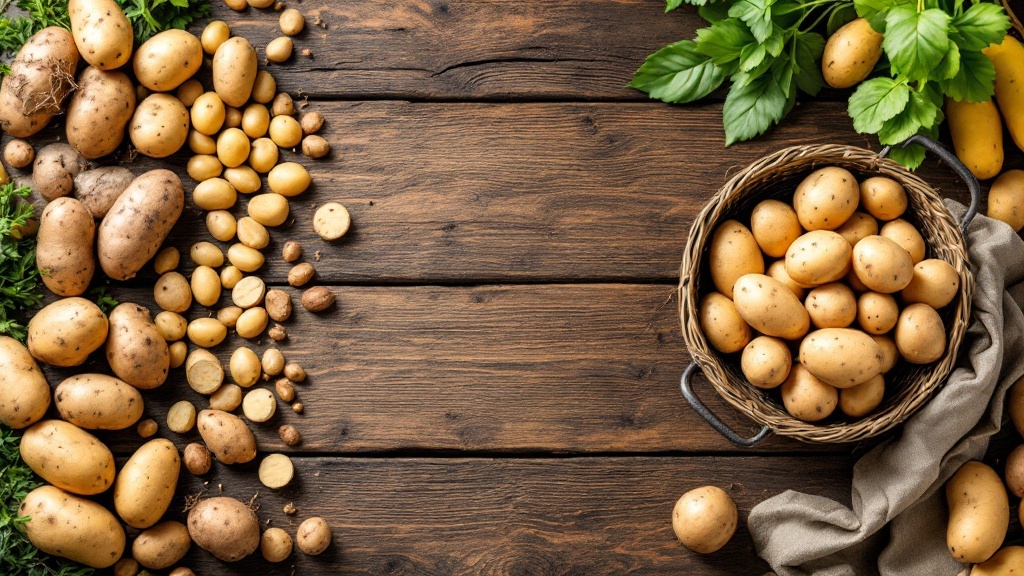
When planting potatoes, the first step is picking the right seed potatoes. The image shows a lovely array of different potatoes, from small ones to larger varieties. Selecting healthy seed potatoes is key to a productive harvest. Look for firm potatoes without any signs of rot or disease. They should have good eyes, which are the little spots where new growth will sprout. Variety matters too! There are waxy, starchy, and all-purpose types. Each type has its own best uses, from mashed potatoes to salads. Think about what you enjoy eating most when making your choice.
Effective Planting Techniques
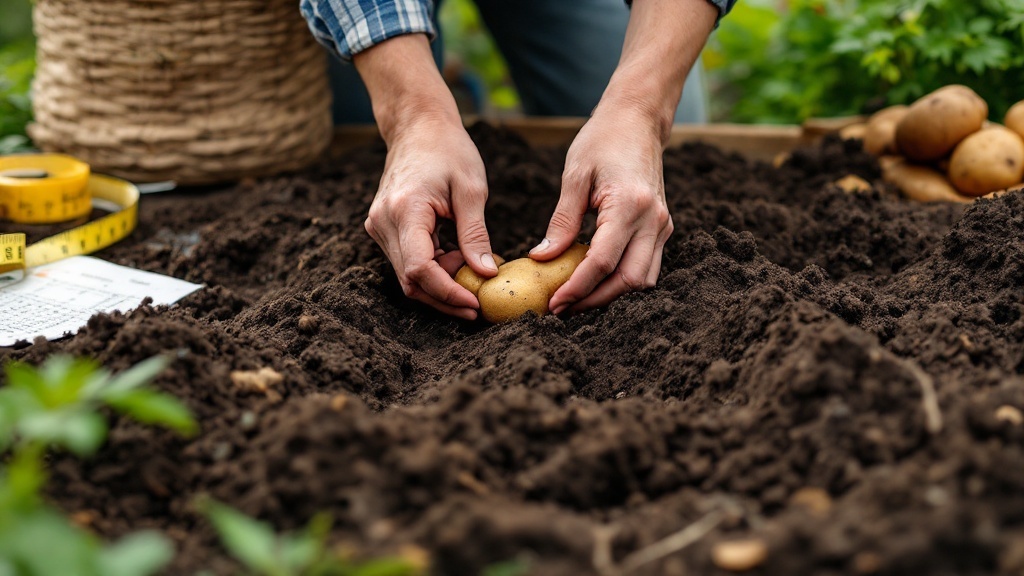
Planting potatoes can be a fun and rewarding task. In the image, you can see a person gently placing a potato into the soil. This step is crucial for a successful harvest.
First, it’s important to select healthy seed potatoes. These should be firm and free from blemishes. Cut larger potatoes into pieces, making sure each piece has at least one eye. This is where new growth will sprout.
Next, prepare the soil. A well-draining, loose soil is ideal. Loosen the soil to about 12 inches deep and mix in some compost for nutrients. This will give your potatoes the best start.
When planting, dig a trench about 4 inches deep. Space the potatoes about 12 inches apart to allow for growth. Cover them with soil and water them gently. Remember, keep the soil consistently moist, but not soggy.
Psst… Look to the left, that is Pumpkin the camera hog!!
Harvesting Potatoes at the Right Time
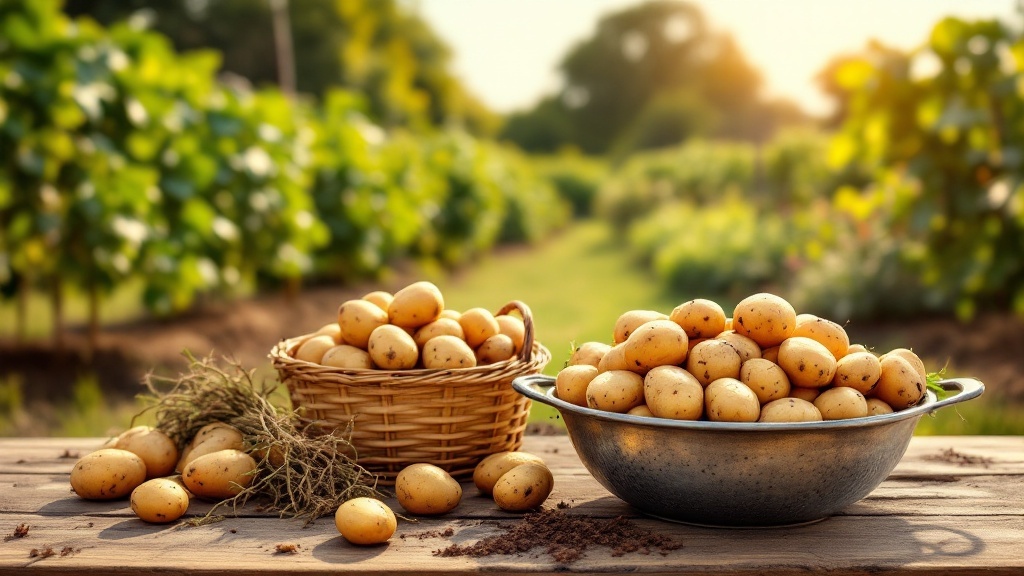
Harvesting your potatoes is a rewarding time in the gardening calendar. It’s when you finally get to enjoy the fruits (or tubers) of your labor.
Knowing when to harvest is key to enjoying your potatoes. Generally, you’ll want to wait until the plants have flowered and the leaves start to yellow and die back. This indicates that the potatoes are ready for harvest. Just picture all those delicious meals you can make with your fresh spuds!
Use a
After harvesting, let the potatoes rest in a cool, dark place for a couple of hours. This helps them dry off and start curing. Once cured, store them in a breathable container to keep them fresh for longer. Enjoy the fruits of your gardening efforts!